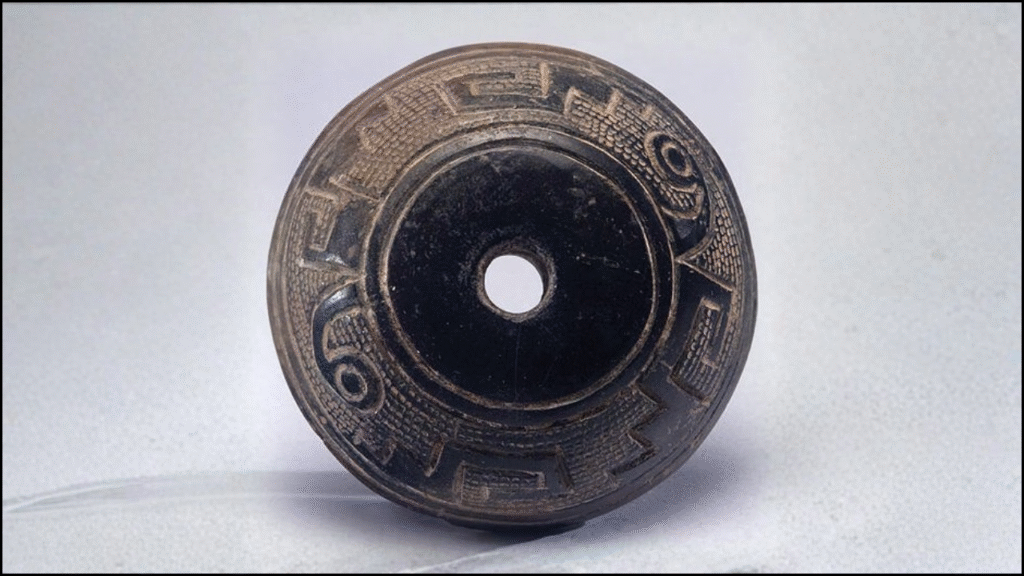
Muisca civilization, one of the great pre-Columbian cultures of the Andes, placed deep significance on everyday tools that also held spiritual meaning. Among these, spindle whorls — small circular weights used in spinning fibers — stood as more than simple instruments of labor. These artifacts reflected the Muisca’s technological skill, artistic creativity, and connection between domestic activity and sacred ritual. Understanding spindle whorls reveals how the Muisca blended craftsmanship, symbolism, and gendered traditions to shape their social and religious world.
Table of Contents
Definition and Function of Spindle Whorls
A spindle whorl is a rounded disc, typically made of ceramic, stone, or bone, used to add momentum and stability to a spinning spindle.
The Muisca used spindle whorls to spin cotton, wool, and maguey fibers into thread.
The whorl was attached to the lower part of a spindle stick, helping control thread thickness and tension.
Different sizes and weights allowed for varied spinning techniques, depending on the desired fineness of the textile.
The tool served both practical and symbolic functions, linking daily work with cosmic and spiritual balance.
Aspect
Description
Material
Clay, stone, bone, or ceramic
Shape
Circular or conical with a central hole
Function
Adds weight and control to spinning fibers
Products Made
Cotton and maguey threads for weaving
Symbolism
Represents creation, fertility, and continuity
Textile Production in Muisca Society
Textiles were among the most valuable goods in Muisca culture, used for clothing, trade, and ceremonial exchange.
Cotton was cultivated in the warmer valleys, while maguey and wool were sourced from higher altitudes.
Women were the primary spinners and weavers, and their work symbolized fertility, order, and continuity of life.
Spindle whorls were essential in producing fine threads for mantles, belts, and ceremonial garments.
The quality of thread was often associated with social rank, as nobles wore elaborately woven fabrics with symbolic designs.
Fiber Type
Source
Purpose
Cotton
Lowland valleys
Soft textiles for elite use
Maguey (Agave)
Highland regions
Strong fibers for ropes and everyday wear
Animal Wool
Llamas and alpacas (through trade)
Warm clothing and ritual textiles
Symbolism and Spiritual Meaning of Spindle Whorls
Spinning symbolized creation and transformation, reflecting the cyclical nature of life.
The motion of the spindle mirrored the movement of the sun and stars, representing the universe in perpetual rotation.
Spindle whorls were associated with Chía, the Moon goddess, who represented femininity, fertility, and cyclical balance.
Women used spindle whorls during ritual offerings to invoke blessings for family prosperity and agricultural success.
The circular form of the whorl symbolized infinity and the connection between earthly and cosmic cycles.
Designs and Decorative Patterns
Many spindle whorls were intricately decorated with geometric motifs, spirals, and animal figures.
Spirals represented the eternal flow of energy and life.
Zigzag patterns reflected lightning and water, vital forces for agriculture.
Frog and bird motifs symbolized fertility, communication with the divine, and natural abundance.
The designs often mirrored those found in pottery, showing a shared aesthetic and symbolic language across crafts.
Motif
Meaning
Cultural Context
Spiral
Life cycles, movement of the cosmos
Connection to the sun and time
Zigzag
Water and lightning
Renewal and natural energy
Frog
Fertility and rain
Agricultural abundance
Bird
Messenger to gods
Spiritual communication
Concentric Circles
Unity and cosmic order
Balance of opposing forces
Role of Women and Gender Symbolism
Spinning and weaving were central to women’s roles in Muisca society.
A woman’s skill in textile production reflected her social standing and devotion to family.
Spindle whorls symbolized feminine creativity — the power to transform raw material into something purposeful and beautiful.
Women used spindle whorls in domestic spaces, but their actions carried spiritual weight, aligning with lunar and agricultural cycles.
In some rituals, priestesses or elders spun symbolic threads representing life’s continuity and divine creation.
Ritual and Ceremonial Uses
Spindle whorls were placed in burials as grave offerings, representing creation, continuity, and rebirth.
Artifacts found in sacred sites suggest their use in rituals linked to fertility and harvest blessings.
The spinning process itself may have been seen as a prayer in motion, connecting the physical act of creation with cosmic energy.
In ceremonies honoring Chía and Sué (the Sun god), whorls symbolized harmony between male and female forces.
Ritual destruction of spindle whorls after use reflected the Muisca belief in renewal through sacrifice.
Ritual Context
Purpose
Symbolic Association
Burials
Accompanying deceased women
Representation of life’s cycle
Fertility Ceremonies
Prayers for abundance
Connection with Earth and Moon
Agricultural Festivals
Seasonal rituals
Renewal and prosperity
Marriage Ceremonies
Symbol of unity
Creative power and partnership
Economic and Cultural Importance
Textiles produced with spindle whorls were used as trade items and gifts among Muisca communities.
Fine garments were exchanged in tribute systems, strengthening alliances and political bonds.
The high value placed on textiles elevated the symbolic worth of spindle whorls as tools of wealth creation.
The standardization of whorl sizes across regions suggests a developed textile economy.
Muisca weavers helped preserve cultural knowledge and artistic identity through their craftsmanship.
Archaeological Discoveries and Preservation
Archaeological excavations in Cundinamarca and Boyacá have unearthed spindle whorls made of ceramic, stone, and bone.
Many examples display wear marks, indicating long-term use in daily spinning.
Some were found alongside gold ornaments, showing their association with prestige and ritual importance.
The Museo del Oro and Museo Arqueológico de Sogamoso preserve numerous spindle whorls, highlighting their cultural and symbolic roles.
Contemporary Colombian artisans recreate spindle whorls as a tribute to ancestral craft and feminine creativity.
Location
Findings
Interpretation
Sogamoso
Ceramic and bone spindle whorls
Domestic and ritual use
Tocancipá
Decorated clay examples
Ceremonial significance
Guatavita
Burial offerings with textiles
Symbol of rebirth
Bacatá (Bogotá)
Everyday spindle whorls
Domestic and economic value
Artistic Influence and Modern Relevance
Modern artists reinterpret spindle whorls as symbols of feminine power and cultural continuity.
Workshops in Boyacá and Bogotá promote traditional spinning methods to preserve indigenous heritage.
Muisca descendants view the spindle as a sacred emblem of life’s interconnectedness.
The whorl’s circular form continues to inspire jewelry, sculpture, and textile patterns in contemporary Colombian design.
Reviving spindle whorl symbolism reinforces respect for ancestral wisdom and sustainable craftsmanship.
The Way Forward
Muisca spindle whorls reveal the seamless blend of practicality, spirituality, and artistry that defined this ancient civilization. These humble tools embodied profound beliefs about creation, fertility, and cosmic harmony. Every rotation of the spindle connected the spinner to natural cycles, divine forces, and community identity. Far beyond their function in textile making, spindle whorls became enduring symbols of transformation and continuity. Today, they remain a testament to the Muisca’s deep understanding of balance — between earth and sky, work and worship, and the eternal rhythm of life.
She is a creative and dedicated content writer who loves turning ideas into clear and engaging stories. She writes blog posts and articles that connect with readers. She ensures every piece of content is well-structured and easy to understand. Her writing helps our brand share useful information and build strong relationships with our audience.