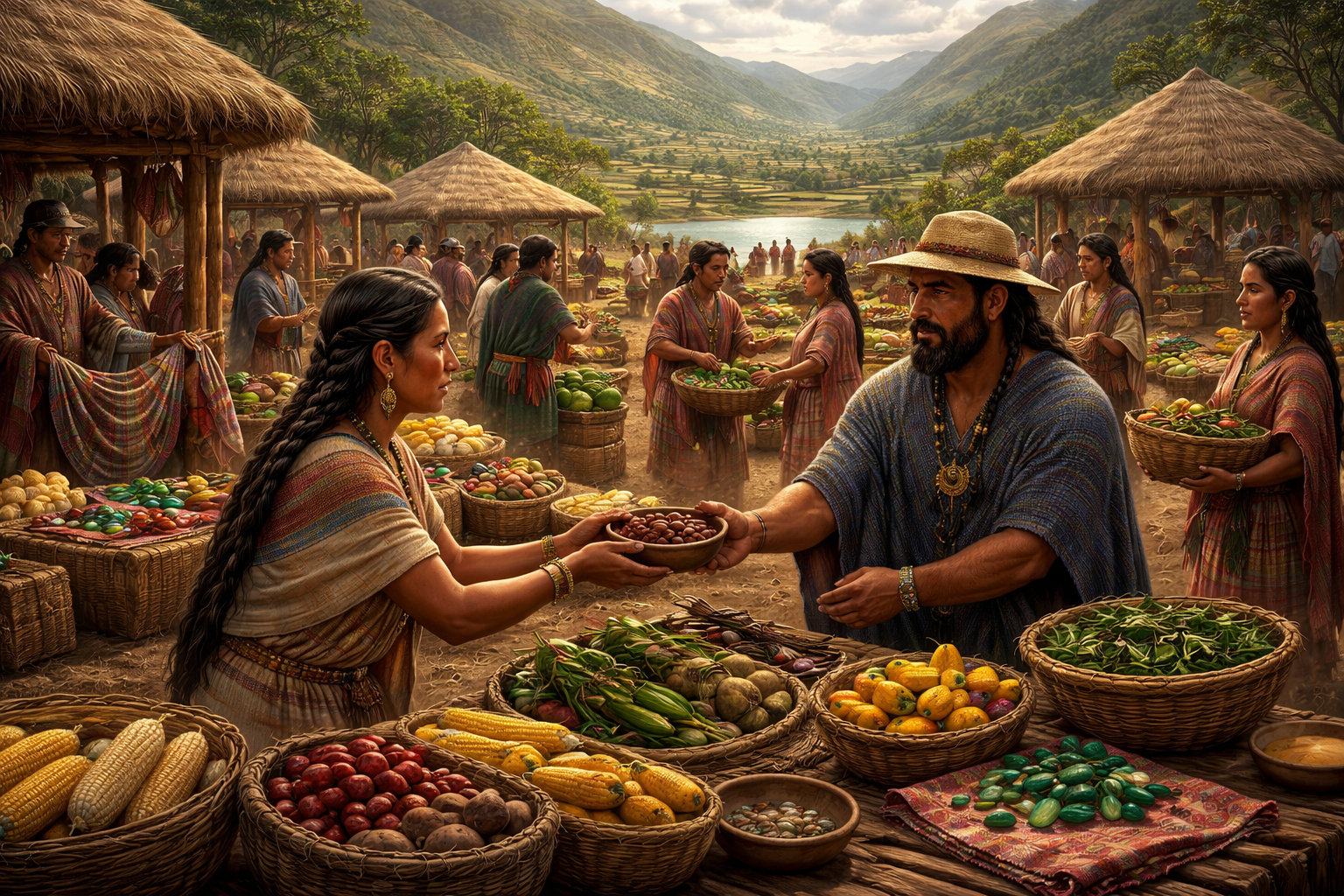
The daily life of the Muisca people reflects the intricate harmony between nature, spirituality, and craftsmanship that defined their civilization. Living in the fertile highlands of the Cundiboyacense Plateau, the Muisca developed an advanced way of life grounded in agriculture, artistic creativity, and astronomical observation. Their society flourished long before European contact, maintaining a balance between material needs and spiritual fulfillment. Understanding their daily routines offers a glimpse into how the Muisca shaped one of the most organized and prosperous indigenous cultures of pre-Columbian South America.
Table of Contents
Agricultural Foundations of Muisca Life
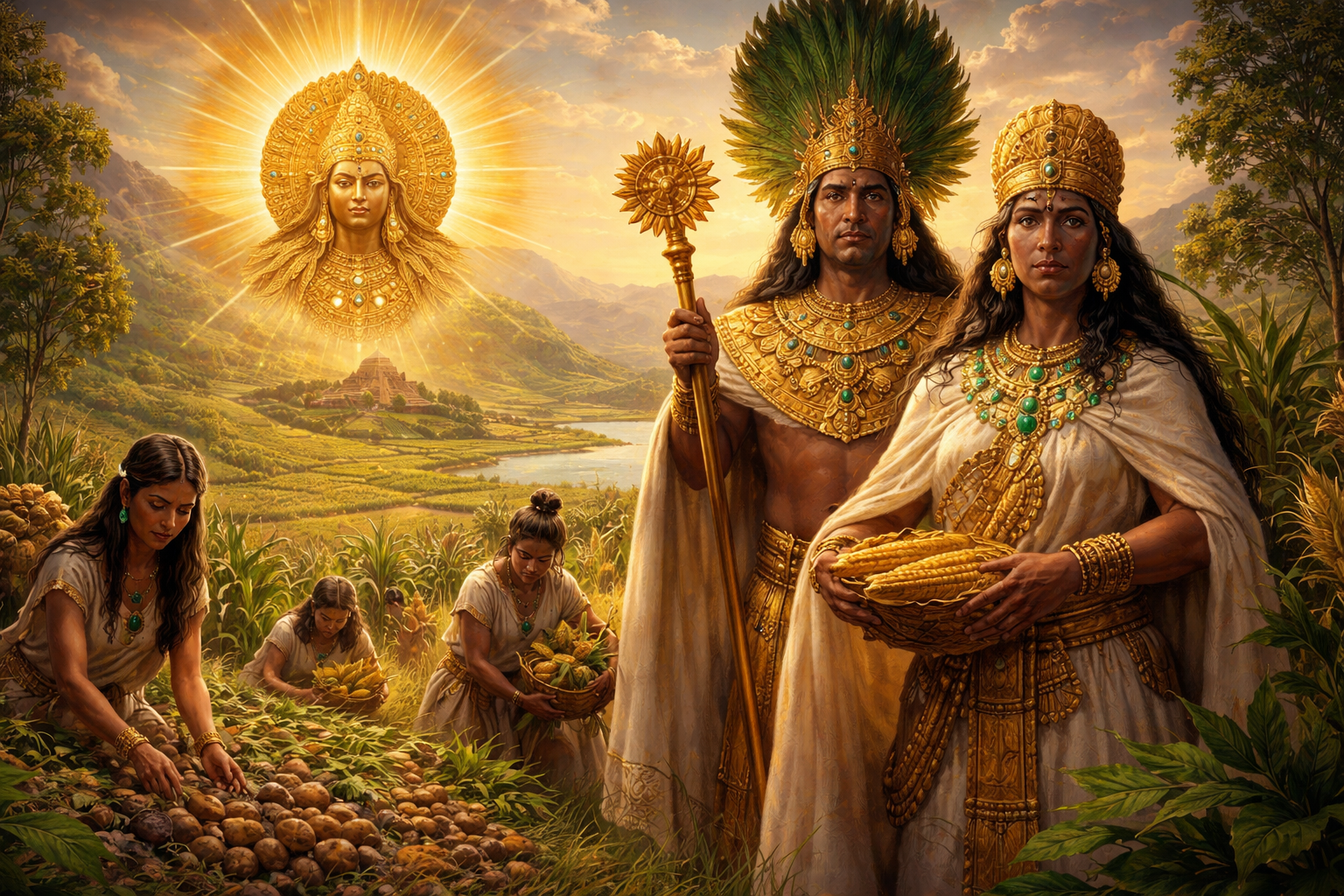
Agriculture formed the backbone of Muisca society and sustained both the economy and population.
The temperate climate and fertile soils of the Eastern Andes allowed year-round cultivation.
Fields were divided into communal and family plots, reflecting social cooperation.
Farming techniques included terracing, irrigation channels, and crop rotation, ensuring productivity without exhausting the land.
Seasonal activities were coordinated according to the Muisca lunar and solar calendars.
Religious ceremonies marked the sowing and harvesting periods, linking agriculture with divine blessings.
Principal Crops and Their Uses
Crop
Use in Daily Life
Religious or Cultural Role
Maize
Staple food, prepared as arepas and chicha (fermented drink)
Offered during harvest rituals
Potatoes
Daily diet for all classes
Symbolized abundance and sustenance
Quinoa
Nutritional supplement
Used in purification and fertility ceremonies
Beans
Protein source
Cooked in communal feasts
Coca leaves
Traded and used for endurance
Employed in rituals and spiritual offerings
Women played a vital role in planting, harvesting, and food preparation.
Men managed larger fields and irrigation systems.
Agricultural surplus enabled trade with neighboring tribes, particularly for tropical fruits and raw materials unavailable in the highlands.
The Muisca also practiced animal husbandry, raising guinea pigs and ducks for food and ritual use.
Art as Expression of Identity and Belief
Art in Muisca society was not merely decorative but held deep symbolic and spiritual meaning.
Every artistic object—from pottery to gold jewelry—reflected beliefs, myths, and daily life.
Goldsmithing was a highly respected craft. The Muisca perfected the lost-wax technique to create intricate ornaments, figurines, and ritual objects.
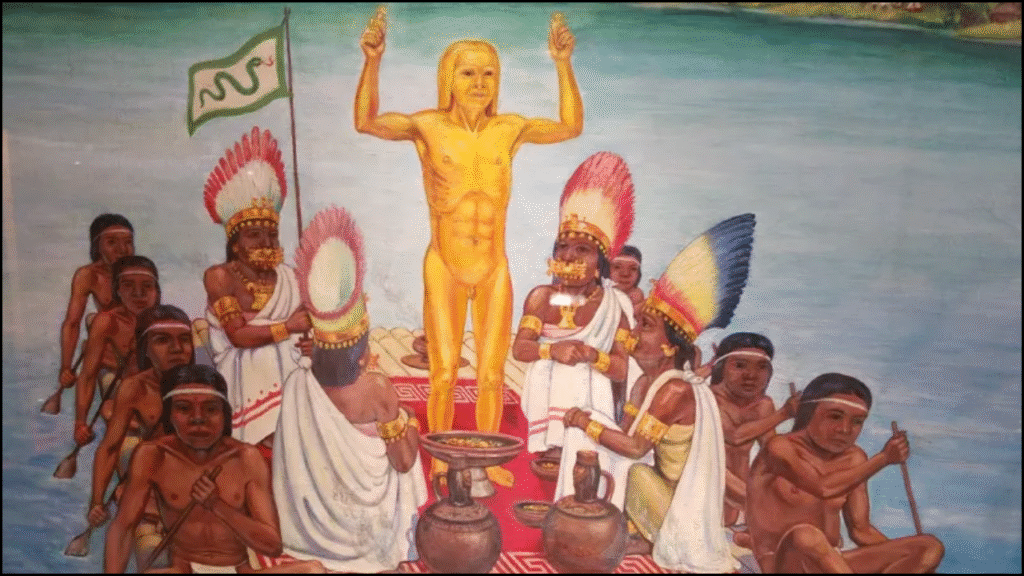
Tunjos, small gold figures, were placed as offerings to gods or spirits in lakes, caves, and temples.
Artisans crafted jewelry such as nose rings, pendants, and diadems to denote social status and religious devotion.
Pottery was used for cooking, storage, and ceremonial purposes. Designs often included geometric patterns and depictions of animals, stars, and divine symbols.
Artistic Forms and Their Cultural Functions
Art Form
Material/Technique
Function or Meaning
Goldwork (Tunjos, jewelry)
Lost-wax casting with gold and copper
Used in rituals and as symbols of rank
Pottery
Hand-molded clay, fired in open kilns
Served domestic and ceremonial needs
Textiles
Cotton and wool dyed with plants
Reflected social class and regional identity
Rock Art
Engravings and pigments on stone
Recorded myths and astronomical events
Beadwork
Shells, seeds, and stones
Used in adornment and trade
Artistic production was concentrated in family workshops and often passed down through generations.
Women wove colorful fabrics and clothing decorated with traditional patterns.
The artistic emphasis on circular and spiral motifs symbolized cycles of life, nature, and the cosmos.
Music and dance accompanied religious ceremonies, emphasizing rhythm as a bridge between humans and gods.
Astronomy: The Muisca Science of the Skies
Astronomy was central to Muisca daily life, guiding agriculture, religion, and governance.
The Muisca developed one of the most accurate lunisolar calendars in pre-Columbian America.
Their calendar system included 20 months of alternating 30 and 37 days, totaling 740 days across two years.
Astronomical observation determined the timing of sowing, festivals, and pilgrimages.
Temples and ceremonial centers were aligned with celestial events like solstices and equinoxes.
The observatory of El Infiernito near Villa de Leyva served as both a religious site and a scientific instrument.
The Sun and Moon held special importance, represented by the deities Sué and Chía, whose balance symbolized order and life.
Astronomical Practices and Their Applications
Astronomical Element
Observation Site
Purpose or Function
Sun (Sué)
Sogamoso (Sun Temple)
Determined agricultural and ritual cycles
Moon (Chía)
Chía (Moon Temple)
Marked feminine and fertility phases
Stars and Constellations
El Infiernito, Villa de Leyva
Guided navigation and seasonal timing
Solstices and Equinoxes
Plateau alignments and temples
Marked planting and harvest festivals
Planetary movements
Oral and visual records
Linked to myths and divine messages
Priests known as chyquy or astronomer-priests observed the heavens to maintain balance between cosmic and earthly life.
Astronomy influenced architecture, as many structures faced sunrise or sunset points during key celestial moments.
Muisca mythology connected celestial events with moral lessons and historical legends, reinforcing community unity.
Domestic and Social Life
Muisca households were organized around family units living in circular huts made from cane, mud, and straw.
Villages were compact, built near water sources and farmlands.
Men handled political affairs, hunting, and construction, while women managed the home, weaving, and food production.
Social classes included the nobility (caciques and priests), commoners, and artisans, though the society valued cooperation over conflict.
Education was informal and based on oral tradition, teaching moral conduct, agricultural skills, and respect for nature.
Children learned songs, stories, and crafts that preserved cultural knowledge.
Roles and Responsibilities in Daily Life
Group
Primary Duties
Cultural or Social Importance
Men
Farming, hunting, construction, governance
Maintained external relations and security
Women
Cooking, weaving, child care, planting
Preserved traditions and domestic stability
Priests (Chyquy)
Astronomy, rituals, teaching
Mediated between gods and humans
Artisans
Crafting gold, pottery, and textiles
Sustained trade and cultural identity
Elders
Storytelling and guidance
Ensured transmission of ancestral wisdom
Religious Connection in Everyday Activities
Spirituality permeated every aspect of Muisca life.
Daily rituals included small offerings of food or coca to household gods.
Larger ceremonies took place at lakes and temples, where the community gathered to seek blessings for good harvests and health.
Music, dance, and the burning of aromatic herbs accompanied these rituals.
The Muisca viewed the cosmos as a sacred order that required balance between humans, nature, and deities.
Ethical living, generosity, and respect for the environment were considered spiritual duties.
Economic and Craft Specialization
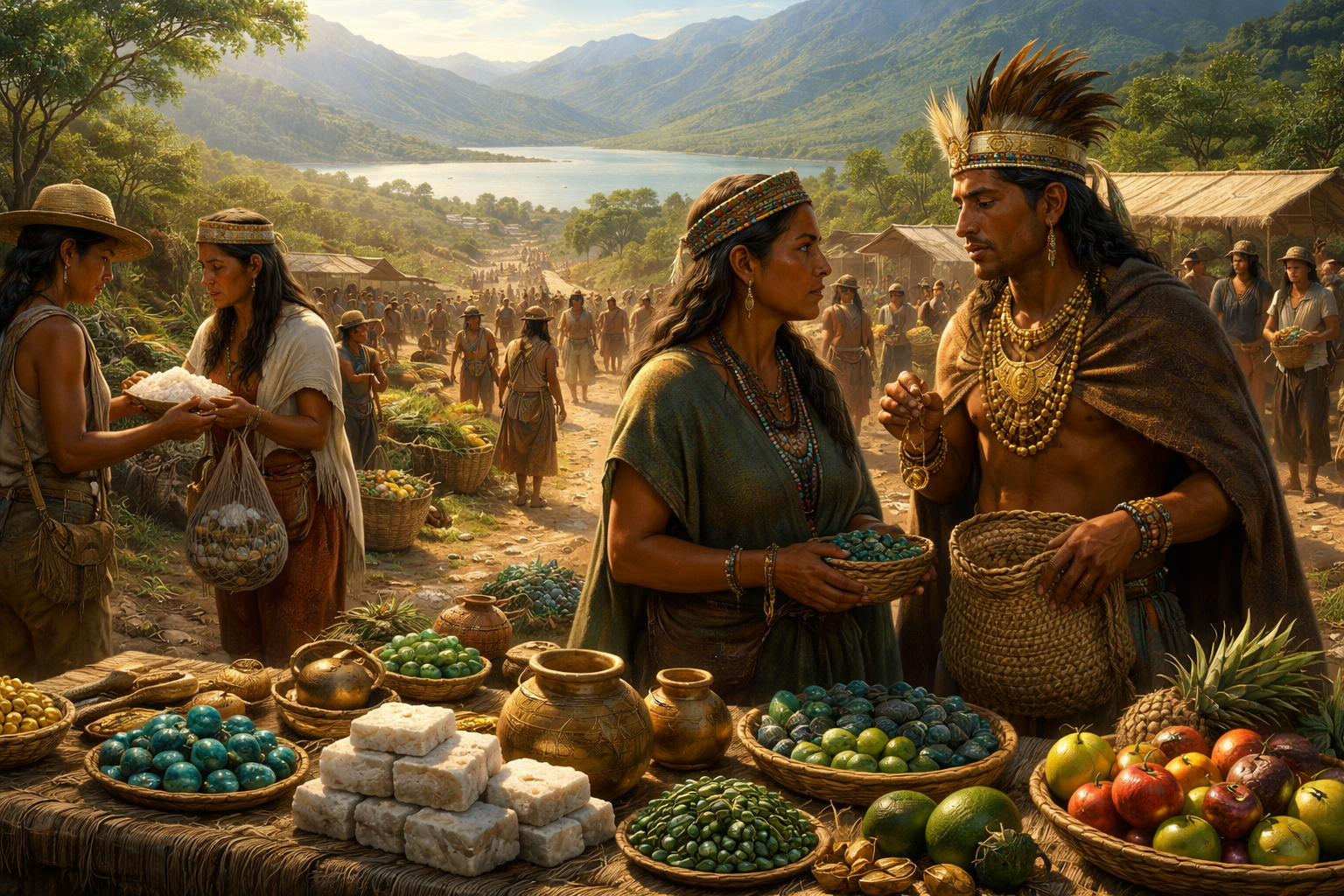
The Muisca economy operated on barter trade, with goods exchanged rather than purchased.
Salt, emeralds, gold items, and textiles were traded within and beyond their territory.
Skilled laborers specialized in salt mining, weaving, and metalwork.
Markets were lively centers of interaction where social and cultural exchange took place.
Craftsmanship not only supported economic activity but also reinforced communal pride and identity.
Key Economic and Craft Activities
Activity
Tools or Materials Used
Resulting Products
Salt Mining
Stone basins and evaporation pits
Salt blocks used in trade
Goldsmithing
Wax molds, furnaces, hammers
Jewelry and ritual figurines
Weaving
Looms, natural dyes
Cotton and woolen garments
Pottery
Clay, pigments, fire pits
Bowls, jars, ritual urns
Agriculture
Wooden hoes, irrigation ditches
Maize, potatoes, beans
Community and Festivities
Festivals celebrated agricultural cycles, celestial events, and social unity.
Music played with flutes, drums, and shells added rhythm to dances and prayers.
Ceremonies honored deities like Sué and Chía, often coinciding with solstices and equinoxes.
Traditional sports such as turmequé (an early form of tejo) strengthened community bonds.
These gatherings reinforced social hierarchy while promoting joy and collective identity.
Looking Ahead
The daily life of the Muisca people embodied the integration of agriculture, art, and astronomy into a unified worldview. Their skillful farming sustained communities, their artistry captured the beauty of nature and belief, and their astronomical knowledge connected them with the cosmos. Life on the Cundiboyacense Plateau reflected balance, respect, and interdependence—values that continue to inspire modern Colombian identity. The Muisca legacy remains a powerful reminder of how science, spirituality, and creativity can coexist in harmony to shape a thriving civilization.
She is a creative and dedicated content writer who loves turning ideas into clear and engaging stories. She writes blog posts and articles that connect with readers. She ensures every piece of content is well-structured and easy to understand. Her writing helps our brand share useful information and build strong relationships with our audience.