The spiritual world of the Muisca civilization reflects a deep connection between nature, cosmology, and daily life. As an indigenous culture of the Andean highlands in present-day Colombia, the Muisca developed a rich religious system centered on celestial forces and sacred landscapes. Their beliefs were not confined to temples but woven into agriculture, governance, and community rituals.
At the heart of the Muisca religion were powerful deities representing the sun, moon, and creation itself. These divine figures shaped moral values, seasonal cycles, and social order. Understanding Muisca spirituality provides insight into how ancient societies interpreted the universe and their place within it.
Table of Contents
Belief Overview
Muisca Religious Structure Summary
| Aspect | Details |
|---|---|
| Core Belief | Polytheistic and nature-centered spirituality |
| Primary Deities | Sun, Moon, creator gods |
| Sacred Elements | Lakes, mountains, celestial bodies |
| Ritual Practices | Offerings, ceremonies, pilgrimages |
| Cultural Role | Guided agriculture, leadership, and social order |
Muisca religion emphasized harmony between humans and nature. Their spiritual practices were designed to maintain balance and ensure prosperity. Deities were seen as active forces influencing everyday life, from crop growth to weather patterns.
This interconnected worldview allowed the Muisca to interpret natural events as expressions of divine will. Their religious system was both practical and symbolic, blending survival needs with spiritual meaning.
Sun Worship
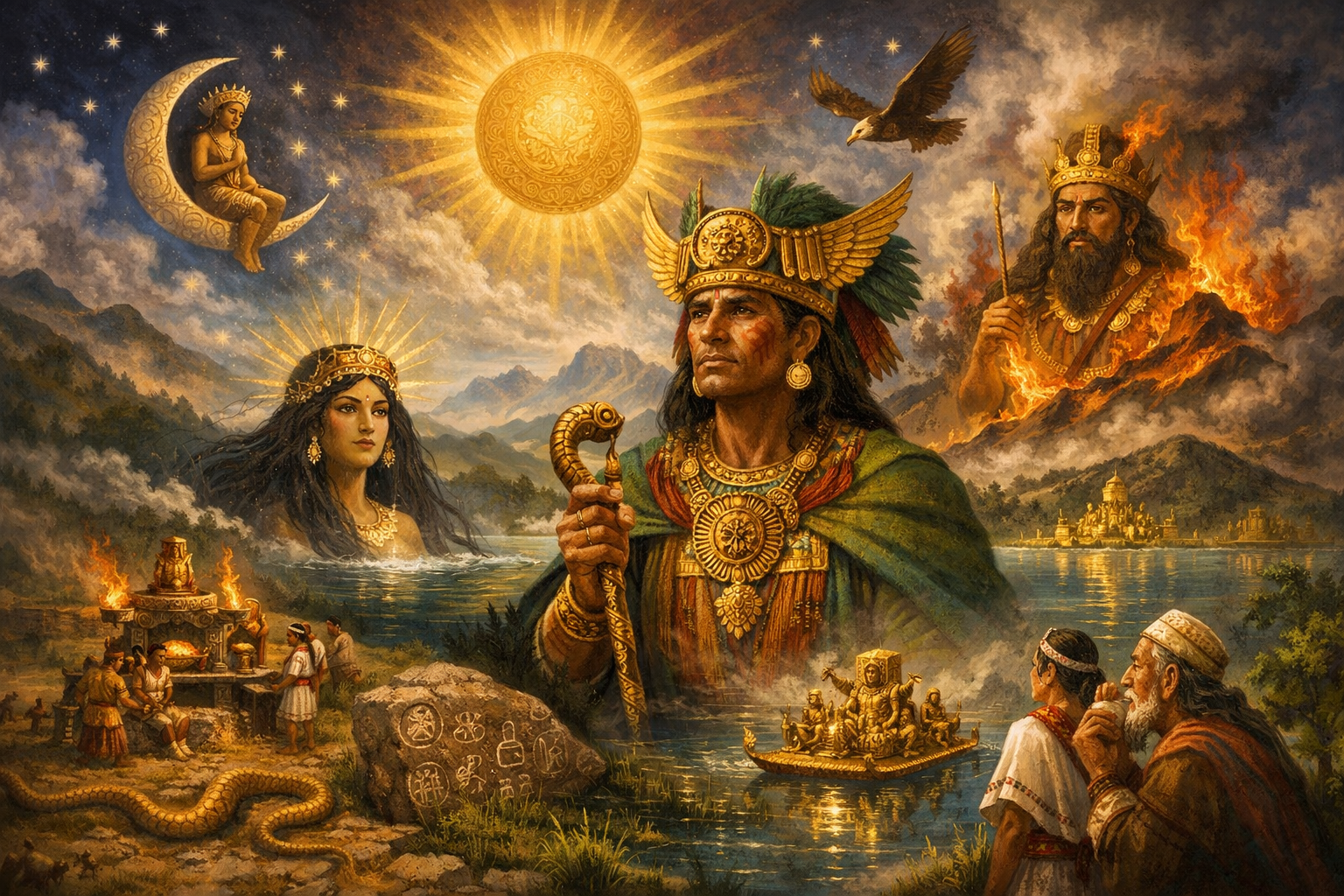
The sun held a central place in Muisca spirituality, represented by the deity Sué. Sué was considered a life-giving force, responsible for light, warmth, and agricultural success. The sun’s daily journey across the sky symbolized renewal and continuity.
Worship of Sué included ceremonies, offerings, and the construction of sacred spaces aligned with solar movements. Priests played a key role in interpreting the sun’s behavior and guiding rituals. This reverence highlights the importance of solar energy in sustaining life and shaping cultural practices.
Moon Reverence
- Goddess Chía
The moon was personified as Chía, a powerful female deity associated with fertility, cycles, and time. - Balance of Forces
The relationship between the sun and moon symbolized harmony between masculine and feminine energies. - Calendrical Role
Lunar cycles guided agricultural activities and ceremonial timing. - Sacred Site
The town of Chía was dedicated to the moon goddess and served as a religious center.
Chía’s influence extended beyond the night sky. She represented transformation and continuity, reflecting the cyclical nature of life. Her worship complemented that of the sun, creating a balanced cosmological system.
The integration of lunar and solar beliefs demonstrates the sophistication of Muisca astronomy and its role in organizing society.
Creation Myth
Muisca cosmology includes the figure of Bachué, a creator deity associated with the origin of humanity. According to legend, Bachué emerged from a sacred lake with a child who later became her partner, giving rise to the Muisca people.
This myth emphasizes themes of fertility, transformation, and the sacredness of water. Lakes were considered portals between the physical and spiritual worlds, reinforcing their importance in religious practices.
Creation stories like that of Bachué provided a framework for understanding human existence and the interconnectedness of all life.
Sacred Rituals
- Offerings of Gold
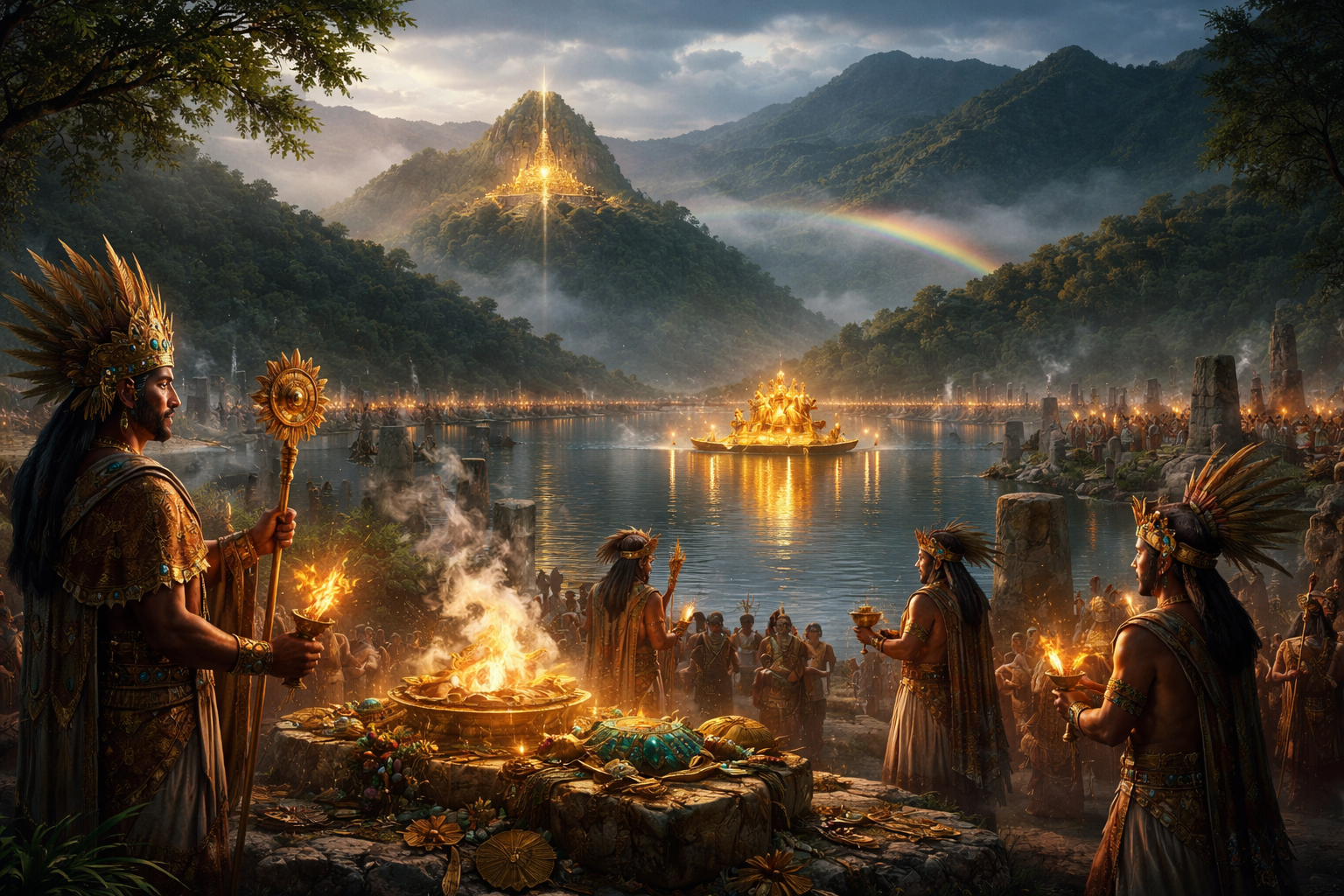
Gold was seen as a sacred material representing the sun and was offered in ceremonies. - Pilgrimages to Lakes
Sacred lakes served as sites for rituals and communication with deities. - Seasonal Festivals
Celebrations marked agricultural cycles and honored divine forces. - Priestly Leadership
Religious leaders guided rituals and maintained spiritual order.
Rituals were essential for maintaining harmony between humans and the divine. They reinforced community bonds and ensured the continuation of cultural traditions.
The use of symbolic materials and sacred spaces highlights the depth of Muisca spirituality. Each ritual carried both practical and symbolic significance.
Cosmic Order
Muisca religion was deeply rooted in the concept of cosmic balance. The interplay between deities, natural elements, and human actions created a dynamic system of order and meaning.
This worldview influenced governance, agriculture, and social structure. Leaders often derived authority from their connection to the divine, reinforcing the integration of religion and politics.
Understanding cosmic order helps explain how the Muisca maintained stability and cohesion within their society. It reflects a holistic approach to life that values balance and interconnectedness.
Cultural Influence
The legacy of the Muisca religion continues to influence modern cultural identity in Colombia. Archaeological sites, oral traditions, and historical records preserve aspects of their spiritual practices.
Contemporary interpretations of Muisca beliefs highlight their ecological awareness and respect for nature. These values resonate with modern discussions about sustainability and environmental stewardship.
The enduring relevance of Muisca spirituality demonstrates its depth and adaptability. It remains a source of inspiration and cultural pride.
Modern Perspectives
- Archaeological Discoveries
New findings continue to shed light on Muisca religious practices. - Cultural Revival
Indigenous communities are reclaiming and preserving traditional beliefs. - Educational Integration
Muisca history is increasingly included in academic curricula. - Tourism and Heritage
Sacred sites attract visitors interested in indigenous culture.
Modern perspectives reveal a growing appreciation for Muisca heritage. Efforts to preserve and study their religion contribute to a broader understanding of human history.
This renewed interest also highlights the importance of respecting and protecting indigenous knowledge systems.
Looking Ahead
Muisca religion offers valuable insights into how ancient societies understood the universe and their place within it. Through their reverence for the sun, moon, and natural elements, the Muisca created a spiritual system that emphasized balance, respect, and interconnectedness.
As interest in indigenous cultures continues to grow, the study of Muisca beliefs will remain important. Their legacy serves as a reminder of the richness of human spirituality and the enduring connection between humanity and nature.