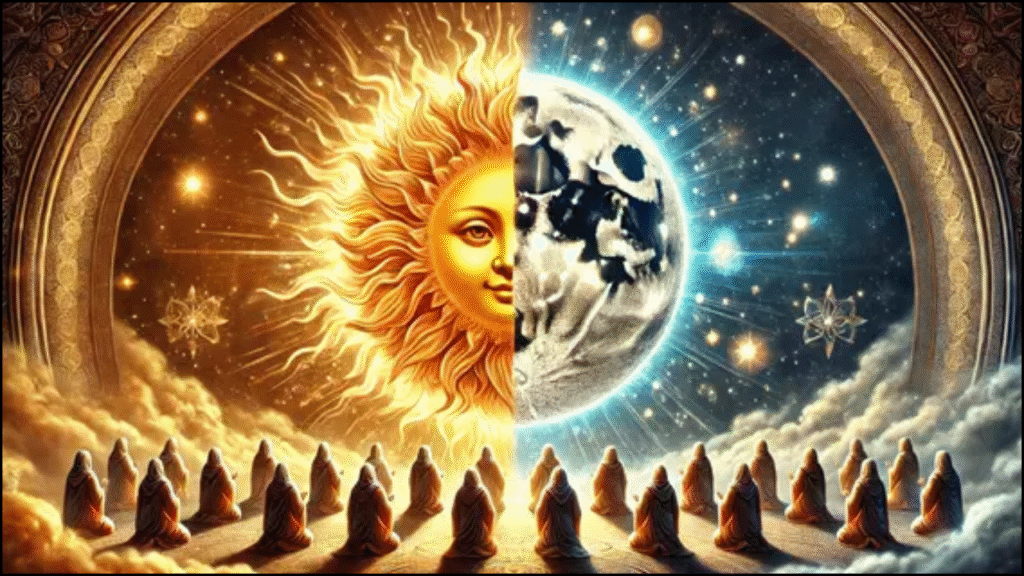
The Sun and Moon held central importance in Chibcha culture, particularly among the Muisca civilization of the Andean highlands in present-day Colombia. These celestial bodies were not merely natural phenomena but divine entities with personalities, powers, and influence over human life. Their myths explained the origins of light and darkness, the cycles of agriculture, and the moral order of the universe. The Sun and Moon served as symbols of cosmic balance, fertility, and the interplay between masculine and feminine forces, reflecting the deep spiritual worldview of the Chibcha people.
Table of Contents
The Sun God: Sué
Sué was revered as the male Sun deity, source of light, life, and warmth.
The Sun symbolized energy, vitality, and cosmic order, sustaining all forms of life on Earth.
Myths describe Sué’s daily journey across the sky as a divine cycle of work, vigilance, and protection, ensuring the balance of day and night.
Sué was associated with leadership and authority, influencing both the Zipa (ruler) and priests, who mediated between humans and the divine.
Solar worship involved offerings of gold, chicha, and ceremonial fires, reflecting the Sun’s spiritual and material significance.
Aspect
Meaning
Ritual Practice
Daily journey
Cosmic order and vigilance
Observation and prayer at sunrise
Light
Life and knowledge
Offerings of gold and tunjos
Fire ceremonies
Purification and renewal
Temple rituals in Sugamuxi
Leadership
Authority and justice
Blessing of rulers and warriors
Solar festivals
Agricultural and communal cycles
Solstice celebrations
The Moon Goddess: Chía
Chía represented the female Moon deity, associated with fertility, water, and the night.
The Moon’s phases guided agricultural cycles, planting, and harvesting, reflecting her influence on the fertility of the land.
Myths portray Chía as a protective and nurturing figure, watching over women, children, and crops.
The Moon was also linked to mystery, intuition, and the subconscious, balancing the Sun’s assertive energy.
Offerings and rituals to Chía were performed at sacred lakes and temples to honor lunar power and request abundance.
Aspect
Meaning
Ritual Practice
Phases of the Moon
Fertility and agricultural timing
Planting and harvesting ceremonies
Night light
Guidance and protection
Evening prayers and offerings
Water influence
Irrigation and fertility
Libations and lake offerings
Femininity
Nurturing and intuition
Rituals for women and family well-being
Lunar festivals
Seasonal transitions
Chía temples and communal observances
Mythological Stories Involving Sué and Chía
Sué and Chía were considered cosmic counterparts, representing masculine and feminine forces.
One myth explains the alternation of day and night as the movement of Sué and Chía in their celestial domains.
The Sun was seen as active, visible, and commanding, while the Moon was reflective, changing, and mysterious.
Tales recount the interplay of these deities with humans, where Sué provided guidance and Chía ensured fertility and protection.
The myths often contained moral lessons, illustrating the consequences of disrespecting cosmic balance.
Myth
Lesson
Symbolic Elements
Sué’s journey across the sky
Vigilance ensures order
Sunrise, light, fire
Chía guiding rivers and crops
Fertility requires harmony
Moon phases, water, rituals
Sun and Moon balance
Masculine and feminine complementarity
Day/night cycles, duality
Disobedience of humans
Ignoring celestial guidance leads to disaster
Droughts, floods, famine
Lunar eclipses
Temporary imbalance warns humanity
Darkening moon, purification rituals
Rituals and Ceremonial Practices
Temples such as Sugamuxi (Sun) and Chía complexes served as focal points for worship and cosmic observation.
Fire was central in solar rituals, symbolizing Chiminigagua’s eternal light and Sué’s energy.
Lunar ceremonies often involved offerings to lakes, reflecting Chía’s connection to water and fertility.
Festivals were timed with solstices, equinoxes, and full moons, marking critical points in the agricultural and spiritual calendar.
Music, dance, and chicha libations reinforced the community’s connection with the Sun and Moon deities.
Symbolic Significance of Gold and Water
Gold represented the Sun’s divine light, used in tunjos, ornaments, and offerings to Sué.
Water, sacred lakes, and rivers symbolized Chía’s life-giving and protective powers.
Combining gold and water in rituals reflected the harmonious interaction of celestial forces.
Offerings emphasized reciprocity with the gods, ensuring continued abundance and cosmic favor.
These materials were not wealth but spiritual conduits, linking humans to divine energies.
Element
Deity Connection
Purpose
Gold
Sué
Representation of solar power and divine favor
Water
Chía
Fertility, purification, and life
Fire
Sué/Chiminigagua
Renewal, light, and protection
Chicha
Both
Libation, celebration, and thanksgiving
Sacred lakes
Chía
Offerings and spiritual communication
Integration with Daily Life and Agriculture
The Sun and Moon influenced agriculture, social hierarchy, and festivals, integrating religion into daily life.
Lunar and solar observations guided planting, harvesting, and irrigation schedules.
Leaders, priests, and farmers aligned activities with celestial cycles to ensure prosperity and divine approval.
The myths and rituals encouraged moral responsibility, respect for nature, and communal participation.
This integration reflected the Muisca philosophy that human action must remain in harmony with cosmic forces.
Legacy of Sun and Moon Myths
Many of these myths and rituals persist in modern indigenous storytelling and cultural memory.
Archaeological evidence of temples, tunjos, and sacred lakes provides insight into Muisca cosmology and spiritual practices.
The duality of Sun and Moon inspired art, architecture, and ceremonial design, emphasizing cosmic balance.
Contemporary research highlights the Muisca as a civilization with astronomical sophistication and spiritual depth.
The enduring significance of Sué and Chía illustrates a worldview where divine, natural, and human realms are inseparably connected.
In Summary
The Sun and Moon myths in Chibcha culture reveal a civilization attuned to the rhythms of the cosmos and the sacred forces that govern life. Sué and Chía embodied masculine and feminine energies, influencing agriculture, morality, and spiritual practice. Through rituals, offerings, and festivals, the Muisca maintained harmony between humans and the divine, reflecting a worldview in which cosmic balance was essential for prosperity and ethical living. These myths continue to offer insights into the spiritual sophistication of the Muisca and their enduring reverence for the celestial forces that shape existence.
She is a creative and dedicated content writer who loves turning ideas into clear and engaging stories. She writes blog posts and articles that connect with readers. She ensures every piece of content is well-structured and easy to understand. Her writing helps our brand share useful information and build strong relationships with our audience.