The Muisca civilization represents one of the most remarkable indigenous cultures of pre-Columbian South America. This ancient society thrived in the highlands of present-day Colombia long before European contact, developing sophisticated systems of governance, trade, and spirituality. The Muisca people formed a unique cultural identity rooted in harmony with nature, economic cooperation, and deep spiritual beliefs. Their legacy continues to influence Colombia’s national identity and offers a window into the region’s rich indigenous heritage.
Table of Contents
Origin and Geographic Setting
The Muisca civilization occupied the central highlands of the Eastern Cordillera of the Colombian Andes.
The territory extended across the modern departments of Cundinamarca and Boyacá.
The fertile plateaus and mild climate supported agriculture and settlement.
Archaeological evidence suggests that the Muisca migrated from northern South America, possibly from regions near present-day Venezuela.
Their settlements were primarily located around the Bogotá savanna and valleys surrounded by mountains.
Political Structure and Organization
The Muisca society was organized into a confederation rather than a centralized empire.
Two main rulers governed the region:
Zipa – the ruler of the southern region centered around Bacatá (modern Bogotá).
Zaque – the ruler of the northern region centered around Hunza (modern Tunja).
A spiritual leader known as the Iraca of Sugamuxi (modern Sogamoso) played a crucial role in religious life.
The political system emphasized cooperation between rulers and priests, ensuring both governance and spiritual balance.
Local chiefs or caciques managed smaller territories and reported to either the Zipa or the Zaque.
Major Political Centers of the Muisca Civilization
Region
Modern Equivalent
Ruler/Title
Significance
Bacatá
Bogotá
Zipa
Political and economic hub of the southern confederation
Hunza
Tunja
Zaque
Administrative center of the northern region
Sugamuxi
Sogamoso
Iraca
Major spiritual and religious capital
Turmequé
Boyacá
Local Cacique
Known for sports, especially traditional games
Social Hierarchy and Daily Life
Muisca society was hierarchical but relatively egalitarian compared to other Andean civilizations.
Nobility consisted of rulers, priests, and warriors who held privileges in land and wealth.
Commoners were farmers, craftsmen, and traders contributing to the economy through tribute and labor.
Artisans specialized in goldsmithing, weaving, and pottery, producing items used in rituals and trade.
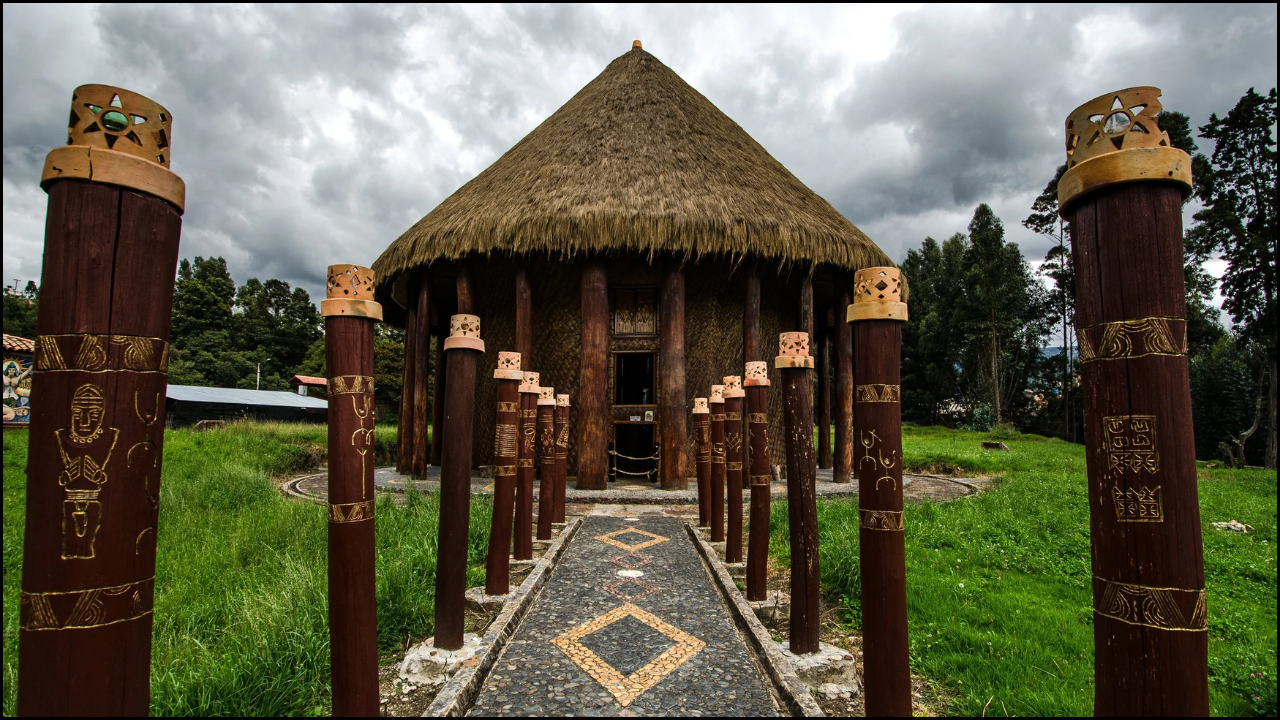
Housing was made of wood, cane, and clay, with circular huts thatched with reeds.
Clothing was woven from cotton and decorated with natural dyes and patterns reflecting rank and role.
Religion and Spiritual Beliefs
The Muisca were deeply spiritual and believed in numerous gods associated with natural elements.
Major deities included:
Chía – the Moon goddess representing fertility and the feminine principle.
Sué – the Sun god symbolizing masculinity and strength.
Bochica – a civilizing hero who taught ethics, agriculture, and social order.
Huitaca – a rebellious goddess linked with pleasure and chaos.
Temples and sacred lakes were central to worship.
Rituals included offerings of gold, emeralds, and food to deities.
Lake Guatavita became famous for the legend of El Dorado, where the Zipa would cover himself in gold dust and make offerings to the gods.
Principal Deities and Their Symbolism
Deity
Domain
Symbolism
Associated Site
Chía
Moon
Fertility and balance
Moon Temple in Chía
Sué
Sun
Strength, time, and order
Sun Temple in Sogamoso
Bochica
Wisdom
Morality and civilization
Tequendama Falls (mythic site)
Huitaca
Rebellion
Freedom and chaos
Cundinamarca region
Economic System and Trade
The Muisca economy was one of the most advanced in pre-Columbian America.
Agriculture formed the foundation, with crops like maize, potatoes, quinoa, and beans.
Salt production from the Zipaquirá and Nemocón mines was a key industry, earning the Muisca the title of “Salt People.”
Goldsmithing and emerald mining contributed to their wealth and cultural expression.
A barter system dominated trade since money was not used.
Trade networks connected the Muisca with neighboring groups such as the Tairona and the Panche.
Goods exchanged included textiles, food, ceramics, and metals.
Major Economic Activities
Economic Activity
Key Locations
Products/Resources
Cultural Impact
Agriculture
Bogotá Savanna
Maize, potatoes, beans
Supported population growth
Salt Mining
Zipaquirá, Nemocón
Salt blocks
Used as currency and for trade
Goldsmithing
Cundinamarca
Jewelry, ritual items
Reflected wealth and artistry
Emerald Trade
Muzo, Chivor
Emerald stones
Strengthened interregional trade
Art, Symbolism, and Cultural Expression
Art played a crucial role in expressing religious devotion and social identity.
Gold artifacts, including pendants, figurines, and crowns, symbolized divine power and purity.
Ceramics featured intricate geometric patterns and were used in daily life and rituals.
Weaving produced colorful garments that represented rank and region.
Music and dance accompanied ceremonies and agricultural festivals.
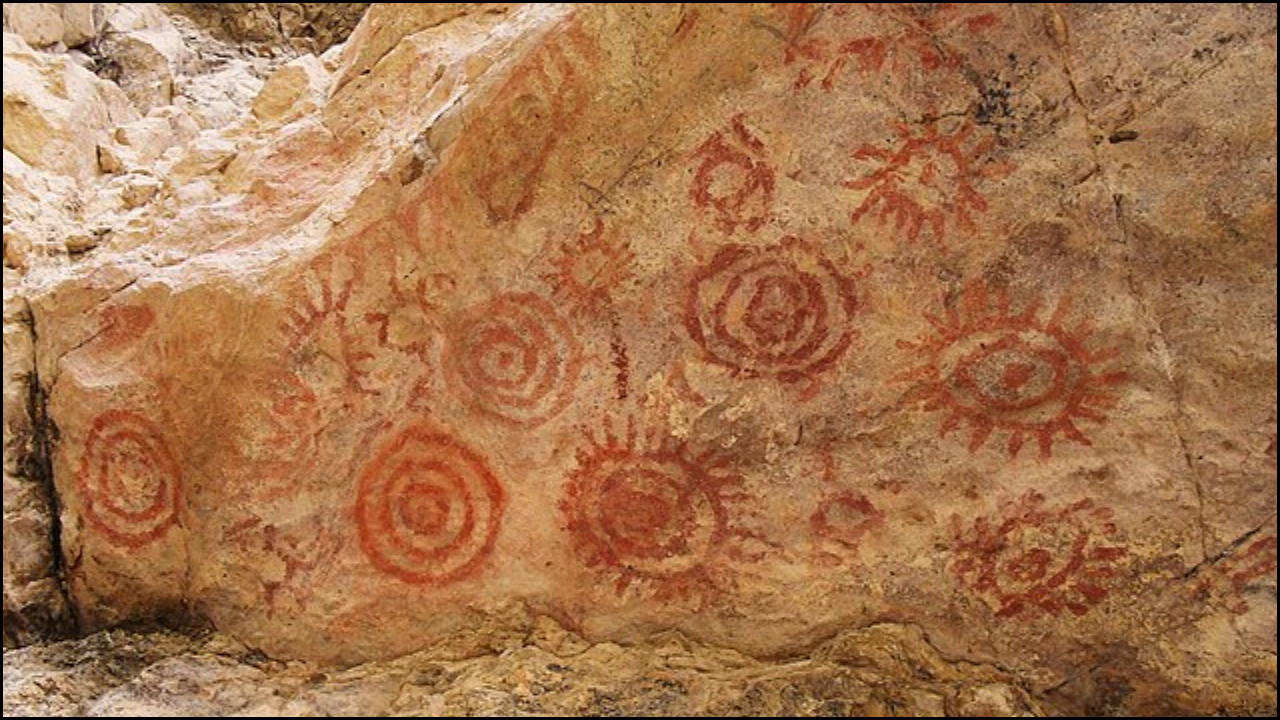
Rock art and carvings reveal astronomical and mythological knowledge.
Astronomy and Scientific Knowledge
The Muisca developed a complex calendar system based on lunar and solar cycles.
Astronomy influenced agriculture, ritual timing, and architecture.
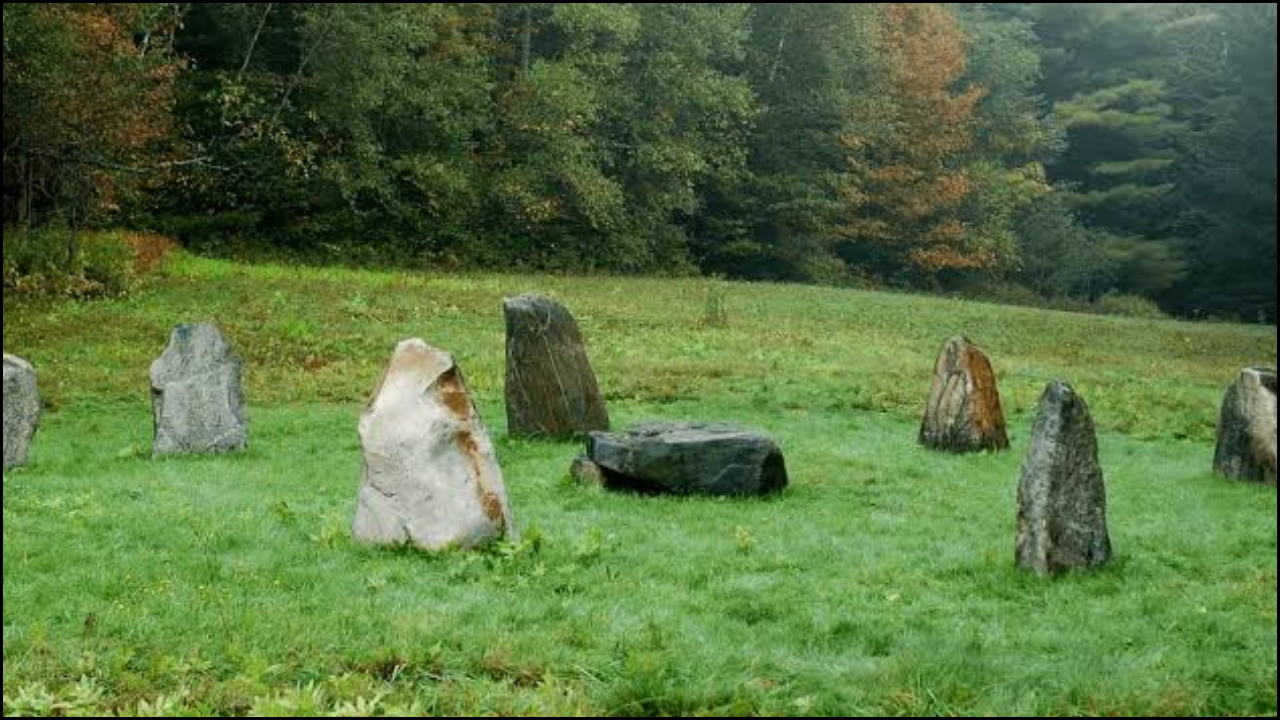
The observatory at El Infiernito near Villa de Leyva served as a ceremonial and astronomical site.
Celestial observations helped predict seasons and maintain harmony between nature and society.
The alignment of temples and shrines reflected cosmic order and religious symbolism.
Contact with the Spanish and Decline
The arrival of Spanish conquistadors in the early 16th century led to the downfall of the Muisca civilization.
Gonzalo Jiménez de Quesada invaded their territory in 1537.
The Zipa Tisquesusa and Zaque Quemuenchatocha resisted but were ultimately defeated.
Spanish colonization disrupted their political and economic systems.
Many sacred sites were destroyed or converted to Christian use.
Despite colonization, Muisca traditions survived through oral history and cultural resilience.
Legacy and Modern Recognition
The Muisca heritage remains visible in Colombian culture, language, and identity.
Modern initiatives aim to revive Muisca traditions through education and community projects.
Festivals celebrate ancient customs, weaving, music, and food.
Archaeological research continues to uncover insights into their advanced social and spiritual systems.
The symbolism of El Dorado endures as a reminder of the civilization’s richness and mystery.
Contemporary Influence of Muisca Culture
Aspect
Modern Expression
Example/Region
Language
Revival of Muysccubun words
Bogotá and Cundinamarca communities
Festivals
Cultural heritage events
Bosa and Suba Muisca celebrations
Art
Reproductions of goldwork and textiles
Museo del Oro, Bogotá
Spirituality
Environmental and ancestral rituals
Lake Guatavita pilgrimages
Final Thoughts
The Muisca civilization stands as a symbol of balance between material prosperity and spiritual depth. Their achievements in governance, craftsmanship, and astronomy reveal a society that valued harmony with nature and the cosmos. The enduring influence of their culture continues to shape modern Colombian identity, reminding future generations of the wisdom and creativity embedded in their ancient roots. The story of the Muisca remains a testament to human ingenuity and the enduring power of cultural memory.
She is a creative and dedicated content writer who loves turning ideas into clear and engaging stories. She writes blog posts and articles that connect with readers. She ensures every piece of content is well-structured and easy to understand. Her writing helps our brand share useful information and build strong relationships with our audience.