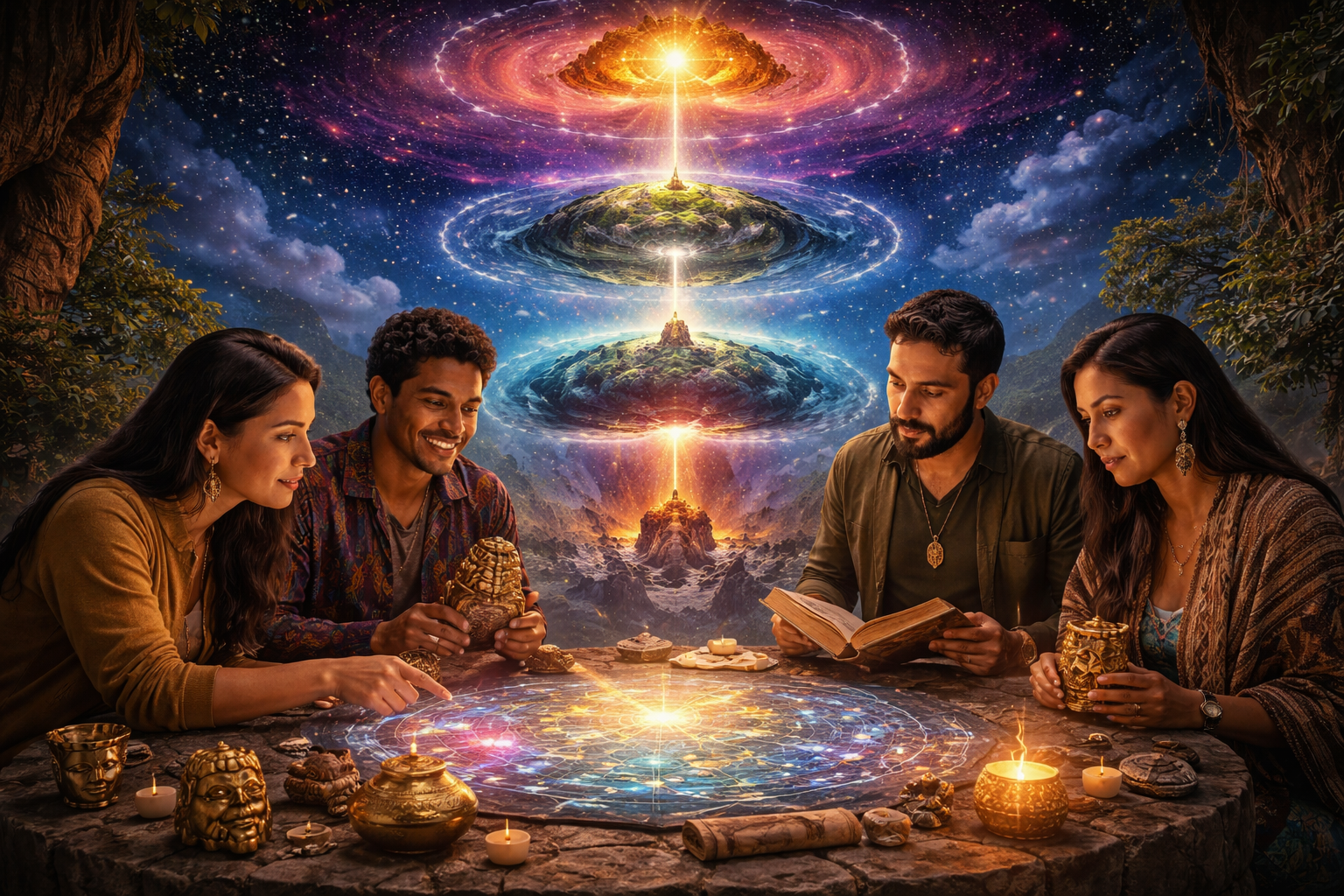
Mythology often reflects humanity’s attempt to understand the balance between opposing forces, and Chibcha mythology is no exception. Rooted in the traditions of the Muisca people of present-day Colombia, these myths explore the tension between order and chaos as fundamental elements of existence. Dualism in this context is not merely conflict, but a dynamic relationship that shapes the cosmos.
Through symbolic narratives, deities, and natural elements, Chibcha mythology presents a worldview in which balance is essential for harmony. The interplay between opposing forces is seen as necessary for creation, transformation, and continuity. Understanding this dualism offers insight into how ancient cultures interpreted the structure of the universe.
Table of Contents
Concept Overview
A structured understanding of dualism in Chibcha mythology helps reveal its deeper meanings. The table below summarizes the key elements of this philosophical framework.
Dualism Concept Summary
| Element | Description |
|---|---|
| Order Forces | Represent harmony, creation, and structure |
| Chaos Forces | Symbolize disruption, change, and unpredictability |
| Deities Role | Embody and mediate opposing energies |
| Natural Symbols | Reflect balance through environmental elements |
| Cultural Meaning | Guides moral and social understanding |
Dualism in Chibcha mythology is not about absolute good versus evil. Instead, it emphasizes coexistence and interdependence between contrasting forces. This perspective highlights the importance of balance in maintaining cosmic stability.
Such a framework also influences social and cultural practices. By recognizing the necessity of both order and chaos, the Muisca people developed a worldview that values adaptability and equilibrium.
Mythic Origins
The origins of dualism in Chibcha mythology are closely tied to creation stories involving key deities such as Bachué and Bochica. These figures represent forces that bring structure and guidance to the world, often emerging from chaotic beginnings.
Creation myths describe a transition from disorder to organized existence, illustrating how balance is achieved over time. This transformation underscores the idea that chaos is a necessary precursor to order, rather than its opposite.
Symbolic Forces
- Light Elements
Associated with clarity, knowledge, and stability, often linked to solar symbolism. - Dark Elements
Represent mystery, transformation, and the unknown aspects of existence. - Water Symbols
Reflect both life-giving order and unpredictable change. - Earth Elements
Indicate grounding, fertility, and structured growth.
These symbolic forces are not isolated but interact continuously. Their relationships demonstrate how balance is maintained through constant movement and transformation.
Deity Balance
In Chibcha mythology, deities often embody dual aspects of existence. Chibchacum, for example, represents both creation and destruction through natural forces.
Such duality in divine figures reinforces the idea that order and chaos are intertwined. Deities do not simply oppose each other but work together to sustain the universe, reflecting a holistic understanding of balance.
Natural Cycles
Natural cycles play a significant role in illustrating dualism. Seasonal changes, agricultural patterns, and environmental shifts all reflect the interaction between stability and transformation.
These cycles demonstrate that periods of chaos, such as storms or droughts, are part of a larger process that ultimately leads to renewal and growth. This perspective encourages acceptance of change as a natural and necessary force.
Cultural Beliefs
- Moral Balance
Ethical behavior is guided by maintaining harmony between extremes. - Ritual Practices
Ceremonies aim to restore balance between opposing forces. - Community Values
Social structures emphasize cooperation and equilibrium. - Spiritual Awareness
Individuals are encouraged to understand their place within the cosmic balance.
Cultural beliefs rooted in dualism influence everyday life. They shape how individuals interact with nature, society, and the spiritual realm.
Philosophical Meaning
Dualism in Chibcha mythology carries deep philosophical significance. It challenges the notion of absolute opposites by presenting a more nuanced understanding of existence.
This perspective aligns with broader philosophical ideas that view reality as a balance of forces rather than a binary conflict. It encourages a holistic approach to understanding the world.
Comparative Views
Similar concepts of dualism can be found in other mythological and philosophical traditions. While each culture expresses these ideas differently, the underlying theme of balance remains consistent.
Comparing Chibcha dualism with other systems highlights its unique emphasis on harmony rather than opposition. This distinction provides valuable insight into the diversity of human thought.
Modern Relevance
- Environmental Awareness
Emphasizes balance between human activity and nature. - Psychological Insight
Reflects the coexistence of opposing emotions and thoughts. - Cultural Identity
Preserves indigenous perspectives and traditions. - Global Philosophy
Contributes to broader discussions on balance and coexistence.
The principles of dualism continue to resonate in contemporary contexts. They offer guidance for addressing modern challenges by promoting balance and adaptability.
Wrapping Up
Dualism in Chibcha mythology presents a profound understanding of the relationship between order and chaos. Rather than viewing these forces as opposing extremes, it emphasizes their interdependence and necessity in sustaining the universe.
By exploring myths, symbols, and cultural practices, we gain insight into a worldview that values harmony and balance. This perspective not only enriches our understanding of ancient traditions but also offers meaningful lessons for navigating the complexities of modern life.