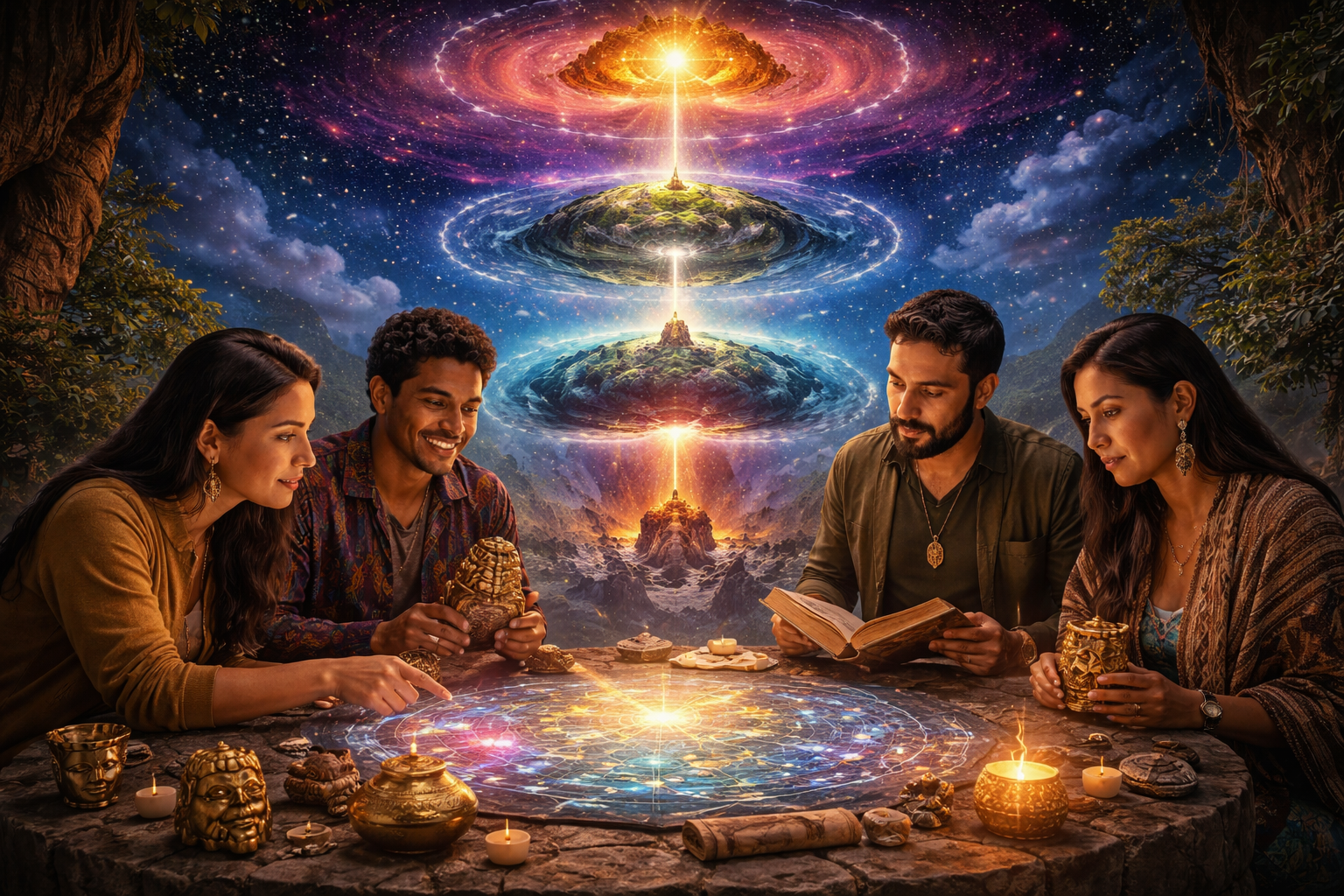
The cosmology of the Chibcha people reflects a profound understanding of balance within the universe. Central to their worldview is the concept of dualism, where opposing forces such as light and darkness coexist in harmony rather than conflict. This balance is embodied through the relationship between solar and lunar deities, shaping both spiritual beliefs and daily practices.
Among these divine forces, Sué and Chía stand as complementary figures. Their interaction represents the cyclical nature of existence, influencing agriculture, rituals, and social organization. Exploring this dualism reveals how the Chibcha integrated cosmic principles into every aspect of life.
Table of Contents
Cosmic Structure
Chibcha cosmology is built on the idea that the universe operates through interconnected opposites. Light and darkness are not seen as enemies but as necessary elements that maintain equilibrium. This perspective emphasizes harmony rather than dominance, reflecting a sophisticated philosophical outlook.
The interplay between celestial bodies provided a framework for understanding natural cycles. Day and night, growth and rest, and life and renewal were all interpreted through this dualistic lens. Such a system allowed communities to align their actions with the rhythms of the universe.
Dualism Overview Table
| Element | Description |
|---|---|
| Light Force | Represented by the sun deity |
| Dark Force | Represented by the moon deity |
| Core Principle | Balance between opposing energies |
| Cultural Impact | Influences rituals, agriculture, and social norms |
| Symbolic Meaning | Harmony, continuity, and cosmic order |
Sun Symbolism
- Source of Life
- The sun was viewed as a provider of energy and growth.
- It played a crucial role in sustaining crops and الحياة.
- Authority and Power
- The sun deity symbolized strength and leadership.
- It was often associated with order and structure.
- Daily Rhythm
- Sunrise marked the beginning of activity and productivity.
- Daylight guided work and social interaction.
- Spiritual Significance
- Rituals honored the sun for its life-giving शक्ति.
- It represented clarity and illumination.
The sun’s symbolism reinforced its importance in both practical and spiritual contexts. It was a central force in maintaining balance within the dualistic system.
Moon Influence
The moon, represented by Chía, embodied complementary qualities to the sun. While the sun brought energy and activity, the moon represented reflection, rest, and renewal. This balance ensured the continuity of life and natural cycles.
Lunar phases guided agricultural and social activities. The moon’s changing appearance symbolized transformation and adaptability, key elements in maintaining harmony within the community.
Dual Roles
- Complementary Forces
- Sun and moon worked together rather than opposing each other.
- Their interaction maintained cosmic balance.
- Cycle Representation
- Day and night cycles reflected the dual nature of existence.
- These patterns guided daily and seasonal activities.
- Spiritual Harmony
- Rituals often acknowledged both deities simultaneously.
- Balance was emphasized over dominance.
- Cultural Integration
- Dualism influenced social structures and traditions.
- It shaped how communities understood their place in the universe.
The dual roles of these deities highlight the interconnectedness of all aspects of life. Balance was not just a concept but a guiding principle.
Agricultural Balance
Agriculture in Chibcha society was deeply influenced by the interplay of sun and moon. The sun provided the energy needed for growth, while the moon guided planting and harvesting cycles. This combination ensured optimal productivity and sustainability.
Farmers relied on both celestial forces to make informed decisions. By aligning their practices with these natural rhythms, they maintained harmony with the environment and maximized yields.
Ritual Systems
Rituals played a vital role in reinforcing the concept of dualism. Ceremonies often involved honoring both solar and lunar deities, reflecting the importance of balance. These practices were designed to maintain harmony between humans and the cosmos.
Sacred spaces and communal gatherings strengthened the connection between spiritual beliefs and daily life. Rituals also served as a means of preserving cultural knowledge and traditions.
Philosophical Meaning
- Harmony Over Conflict
- Opposites were seen as complementary rather than adversarial.
- Balance was the ultimate goal of existence.
- Interconnected Existence
- All elements of life were linked through dual relationships.
- This perspective encouraged احترام for nature.
- Adaptability and Change
- The shifting balance between forces reflected life’s dynamic nature.
- Flexibility was essential for survival and growth.
- Moral Guidance
- Dualism influenced ethical and social behavior.
- It promoted balance in decision-making and relationships.
This philosophical framework provided a comprehensive understanding of the world. It shaped how individuals and communities approached life.
Cultural Legacy
The dualistic principles of Chibcha cosmology continue to influence modern interpretations of indigenous knowledge. Scholars recognize the sophistication of this system and its relevance to contemporary discussions about balance and sustainability.
Preserving these beliefs helps maintain cultural heritage and provides valuable insights into alternative ways of understanding the universe. The legacy of Chibcha dualism remains a testament to the depth of indigenous wisdom.
In Summary
Dualism in Chibcha cosmology reveals a worldview centered on balance, harmony, and interconnectedness. Through the relationship between Sué and Chía, the Chibcha people expressed a profound understanding of life’s rhythms. Their beliefs demonstrate that opposing forces can coexist to create stability and continuity.
This perspective offers valuable lessons for modern society, emphasizing the importance of balance in both human relationships and environmental interactions. The enduring legacy of Chibcha cosmology continues to inspire reflection on harmony and the nature of existence.